The HX1080GF's integrated control coordinates changeovers across the line. The operator enters the new job parameters, and the web tension, printing registration, cutting length, counting range, and stitching positions adjust in coordination.
|
Exercise book production has traditionally been a relay race. The paper runs through a flexo press, the printed rolls move to a cutting operation, the cut sheets travel to a collating section, the gathered sets transfer to a saddle stitcher, and the stitched books go to a trimmer. Between every leg of the relay, someone moves material, some floor space holds work in progress, and some quality is lost in handling. A Flexo Saddle Stitching Line changes the race entirely—one machine runs from paper roll to finished book without a single transfer. This article compares the two approaches on the costs that actually matter.
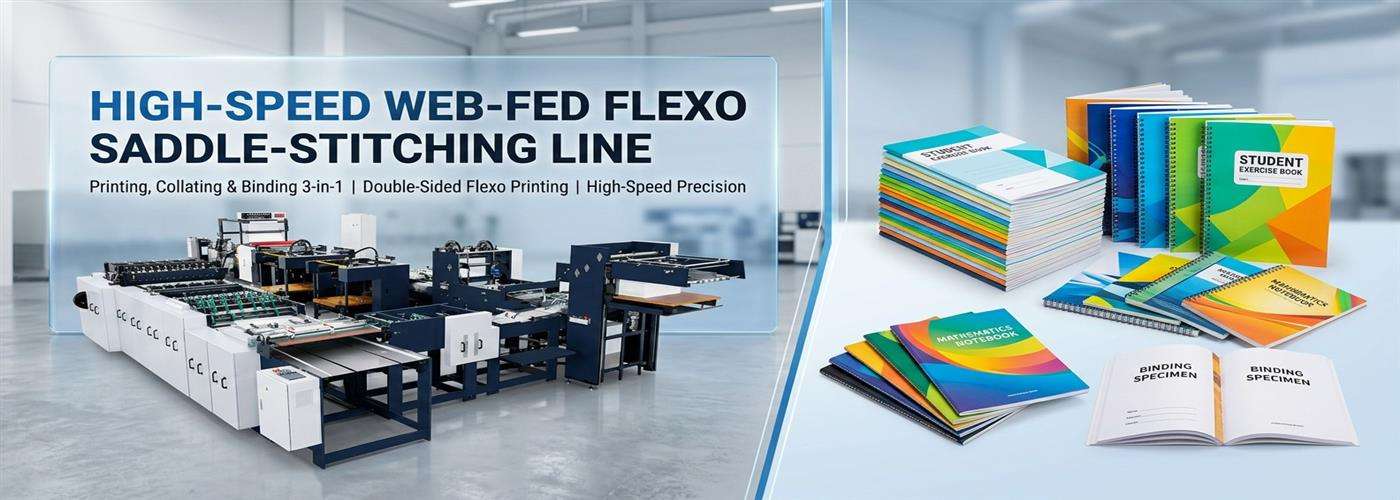
The Traditional Multi Machine Production Path and Its Hidden CostsThe conventional route for an exercise book factory uses four or five separate machines, each performing one stage. A flexo press prints the web. A sheeter cuts it into sheets. A collator gathers the sheets into sets. A saddle stitcher staples them. A trimmer cuts the finished edges. Each machine has its own operator, its own floor footprint, its own setup time, and its own buffer of work in progress. The hidden costs of this path are substantial. Every transfer between machines requires labor to move material and supervision to track it. Every buffer represents capital sitting on the floor—printed paper waiting for the next stage is money that has been spent but not yet earned. Every handling event risks damage: a pallet bumped in transit, a stack shifted in storage, a set misaligned at the stitcher infeed. These costs rarely appear on a single line item; they are distributed across labor accounts, floor space overhead, and quality rejections, which makes them easy to underestimate and hard to eliminate piecemeal. How the 3 in 1 Line Collapses the Relay into a Single PassThe HX1080GF compresses the entire relay into one continuous operation. The machine unwinds the paper roll, controls tension, and guides the web through double-sided, two-color water-based flexographic printing. Hot-air drying sets the ink. Slitting and high-precision cutting divide the web into counted sheets. Cover or insert feeding, automatic alignment, saddle stitching, spine pressing, trimming, and finished-book delivery follow in sequence. Paper enters the machine as a roll; finished books exit the machine. No transfer, no buffer, no intermediate handling.
This integration is what "3-in-1" means: printing, collating, and saddle stitching operate as one system. The speed figures illustrate the scale. The printing unit runs at up to 400 meters per minute with registration accuracy of 0.1 millimeters or better. The sheet counting unit processes 6 to 52 sheets per stack at up to 60 stacks per minute with counting accuracy of plus or minus zero—every stack contains exactly the programmed number of sheets. The stitching unit runs at 60 cycles per minute using German Hohner heads. All three stages are synchronized so the line's output is governed by the whole system rather than by the slowest disconnected stage. The Labor Comparison Between Four Operators and One LineLabor is the most measurable difference. The traditional path needs an operator for the press, an operator for the sheeter or collator, an operator for the stitcher, and an operator for the trimmer—four positions minimum, often five with transfer and supervision roles. At a fully loaded cost of 30,000to30,000to40,000 per position per year, the multi-machine approach costs 120,000to120,000to200,000 annually in direct labor, before the hidden transfer labor is counted. The integrated line needs one operator to load rolls, monitor the control system, and manage job changeovers. The HX1080GF's automation—automatic unwinding, intelligent page counting, automatic alignment, automatic stitching and trimming—handles the physical work. The labor saving is three to four positions per shift. Across two shifts and 300 production days, the annual saving is substantial enough that the labor comparison alone often justifies the investment decision, before floor space and quality are considered. Floor Space and Work in Progress SavingsFloor space is the second major saving, and it compounds over the life of the line. Four separate machines, each with its own buffer zones and access aisles, occupy a large footprint. The integrated line replaces them with one machine of roughly the same length as the separate machines placed end to end—but without the buffer zones between stages. The floor space formerly used for work-in-progress staging becomes available for other production or expansion. Work-in-progress reduction is the quieter but equally important saving. In the multi-machine path, printed rolls, cut sheets, and gathered sets sit between stages. At any moment, the factory holds hours of production value in unfinished material. The integrated line holds minutes. This reduction in tied-up capital improves cash flow and reduces the risk of loss: a work-in-progress pile damaged by humidity, mishandled by a forklift, or obsoleted by a customer's design change is a direct loss. The integrated line carries far less exposure.
Quality Consistency from Registration to StitchingQuality is where integration delivers the least visible but most valuable gains. In the multi-machine path, each transfer is a chance for misalignment. A stack of printed sheets shifted slightly during transport produces books whose images are off-center after trimming. A collated set bumped before stitching produces crooked staples. These defects are discovered downstream, after the cost of all prior stages has been incurred. The integrated line maintains alignment through continuous web control. Registration accuracy of 0.1 millimeters is held from printing through cutting, and the automatic alignment system positions covers and inserts precisely before stitching. The Hohner stitching heads, operating within the line's synchronization, place every staple at the same position with the same depth. The result is a finished book whose printing, cutting, and stitching are all aligned to the same reference—consistency that the multi-machine path achieves only with meticulous transfer handling. Rapid Changeovers for Short and Long Run EfficiencyProduction flexibility depends on changeover time. The multi-machine path requires each machine to be set up separately for a new product: the press for the new image, the collator for the new sheet count, the stitcher for the new size, the trimmer for the new trim dimensions. A complete changeover across four machines takes hours and consumes setup waste at every stage. The HX1080GF's integrated control coordinates changeovers across the line. The operator enters the new job parameters, and the web tension, printing registration, cutting length, counting range, and stitching positions adjust in coordination. The two independent control systems add further flexibility: the printing and collating section can run one product while the binding and trimming section processes another, or the sections can run as a complete line for a single large order. This combination of rapid coordinated changeovers and section independence is what makes both short runs and long runs efficient on the same machine. Calculating the Payback on Line IntegrationThe payback calculation for an integrated flexo saddle stitching line combines several savings streams. The labor saving of three to four positions per shift is the largest and most predictable component. Floor space freed by eliminating buffer zones has a real value in any facility where space constrains production. Work-in-progress reduction improves cash flow. Quality improvement lowers the rejection rate and protects customer relationships. Changeover speed increases effective capacity, which becomes additional revenue for facilities with demand to fill. When these streams are summed, the payback period for a line of this class typically falls between two and four years for a facility producing exercise books and notebooks in the tens of millions per year. After payback, the savings continue for the line's service life, and the quality consistency the line provides supports the premium pricing that integrated production commands.
When the Separate Machine Path Still Makes SenseIntegration is not universally the right answer. Facilities producing very diverse products with frequent complete overhauls of the production configuration may find separate machines more flexible, because each machine can be redeployed independently. Facilities with very low volume may not generate enough throughput to amortize a 30,000-kilogram integrated line. Facilities operating at one production stage only—a trade bindery that stitches and trims purchased signatures but does not print—are better served by the binding and trimming section as a standalone unit, which the HX1080GF's dual control systems explicitly support. For facilities whose core business is high-volume exercise book and notebook production, the integrated line changes the economics decisively. The relay race of separate machines, with its labor, floor space, handling, and quality costs, is replaced by a single-pass flow that produces finished books from paper rolls with one operator and one set of controls. The savings are not incremental; they are structural. |
| Tag:Web-Fed Flexo Saddle-Stitching Line,High-Speed Exercise Book Production Line,Automatic Notebook Binding Line |
Please Leave Your Messenger Here!
We will do our best to make your business prosperous!


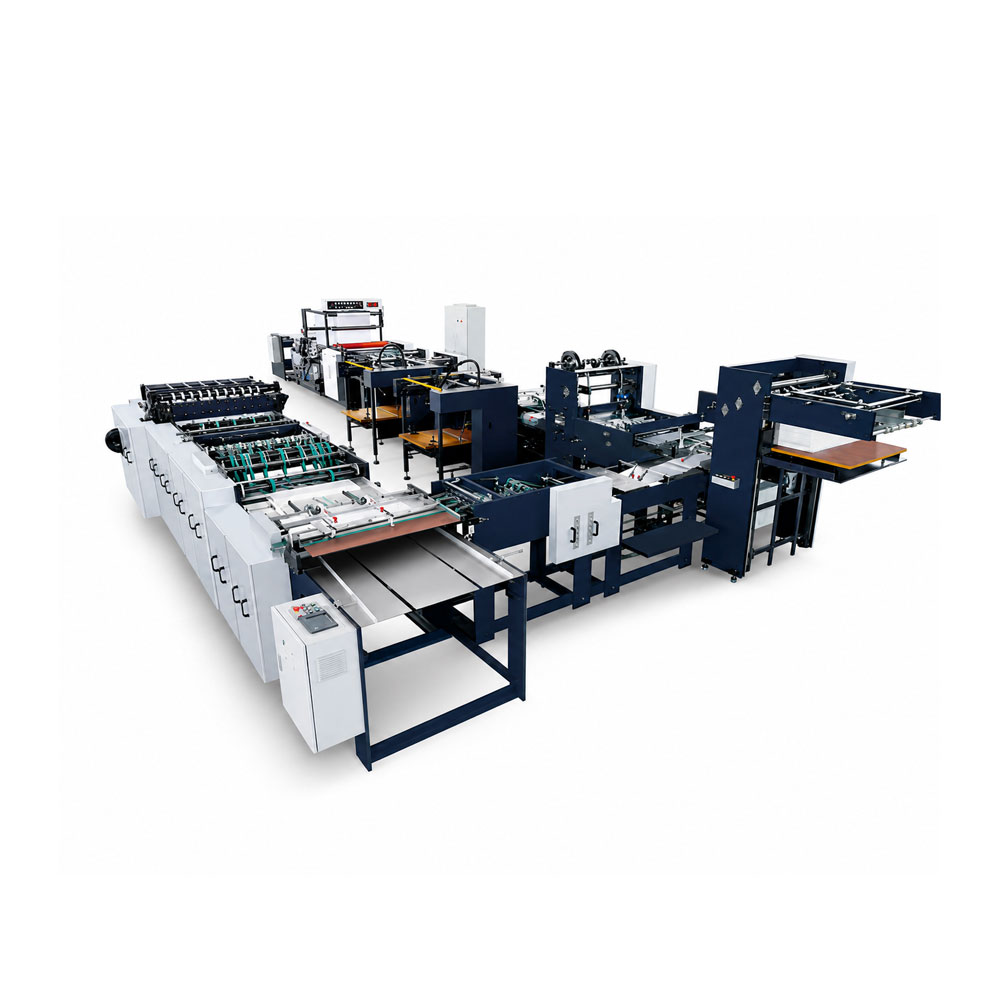 HX1080GF High Speed Web Fed Flexo 3 in 1 Saddle Stitching Production Line