Integrate digital printing with the HDP5000PB13 13‑clamp binder for A4/A5 books and A3 exam papers at 5,000 books/h. Automate thickness detection, spine prep, and gluing to eliminate manual setup and accelerate short‑run delivery.
|
In digital print environments, perfect binding is often the slowest link. While presses print at 3,000–5,000 sheets per hour, traditional binders require manual measurements, clamp adjustments, and glue roller setups that stall production. The HDP5000PB13 Digital Perfect Binding Machine closes this gap with 13 clamps, 5,000 books/h mechanical speed, and inline servo automation designed specifically for high‑speed digital workflows.
The machine's core strength is its inline integration capability. It connects directly to digital presses and finishing systems, receiving printed book blocks and feeding them through a synchronized clamp chain. This eliminates the offline handling, palletizing, and re‑feeding that typically add hours—or days—to job turnaround. For exam paper producers or on‑demand book printers, this inline continuity is transformative. Automatic book block thickness measurement is the first step in automation. As each block enters the clamp, sensors read its exact thickness and transmit the data to the machine's controller. This triggers servo‑driven adjustments across the milling station, gluing unit, and nipping platform—all without operator intervention. Job changeovers that once took 15–20 minutes now happen in seconds, making "book‑of‑one" production economically viable.
Spine preparation combines notching and fine milling to optimize glue penetration. Notching cuts shallow grooves into the spine, creating channels for adhesive to anchor into the paper fibers. Fine milling removes paper burs and opens the fiber ends, ensuring maximum surface area for bonding. This dual‑action process is critical for digital toners and inkjet prints, which often create a hydrophobic surface that resists adhesion. The independently servo‑driven gluing system is a standout feature. Unlike fixed‑position glue rollers, the HDP5000PB13 uses a spine‑side‑spine roller arrangement to apply adhesive precisely where needed. Spine glue penetrates the notches; side glue secures the cover hinges. The glue cut‑off length adjusts dynamically without stopping production, preventing excess adhesive on narrow books or insufficient coverage on wide formats. Nipping quality defines the final book's appearance. The dual‑cam nipping platform applies controlled pressure to form a flat book back and straight spine. This prevents the "rounded spine" effect common in high‑speed binding, ensuring books stack neatly and open properly. For exam papers and notepads, this flatness is essential for storage and handling. Cover feeding is continuous and accurate. The vertical cover feeder allows operators to reload covers without stopping the machine. Adjustable guide rails ensure precise cover‑to‑block alignment, eliminating skewed covers that cause binding rejects. This is particularly valuable for A3 exam papers, where covers must align perfectly with pre‑scored fold lines.
The one‑piece machine frame provides the rigidity needed for 5,000 books/h operation. At high speeds, vibration can cause misalignment in milling, gluing, and clamping. The HDP5000PB13's solid construction minimizes oscillation, maintaining ±0.5 mm accuracy even during marathon runs. This stability is why it can sustain speeds that lighter‑duty binders cannot match. Product format flexibility is built in. The machine automatically switches delivery paths between books and examination papers. A4/A5 books follow one conveyor route; A3 sheets follow another. This eliminates manual sorting and ensures exam papers exit unfolded and ready for distribution—a critical requirement for educational institutions. Application versatility extends beyond books. The HDP5000PB13 excels at notepads and NCR forms, where consistent glue application and clean edge cutting are essential. Its servo‑controlled glue system prevents bleed‑through on thin NCR paper, while the nipping platform ensures pads stay tightly bound during use.
Labor efficiency is significant. One operator manages the entire inline process, from monitoring the digital press to replenishing covers. The automation reduces staffing needs by 60–70% compared to offline binding setups, freeing personnel for prepress, packing, or quality control. For digital printers and educational material producers, the HDP5000PB13 is not just a binder—it is a throughput multiplier. By synchronizing with digital presses at 5,000 books/h, automating setup, and delivering format‑specific finishing, it transforms perfect binding from a bottleneck into a high‑profit, high‑volume production stage. |
| Tag:Digital Perfect Binding Machine,Perfect Binder,Automatic Book Binding Machine,Examination Paper Binding Machine |
Please Leave Your Messenger Here!
We will do our best to make your business prosperous!


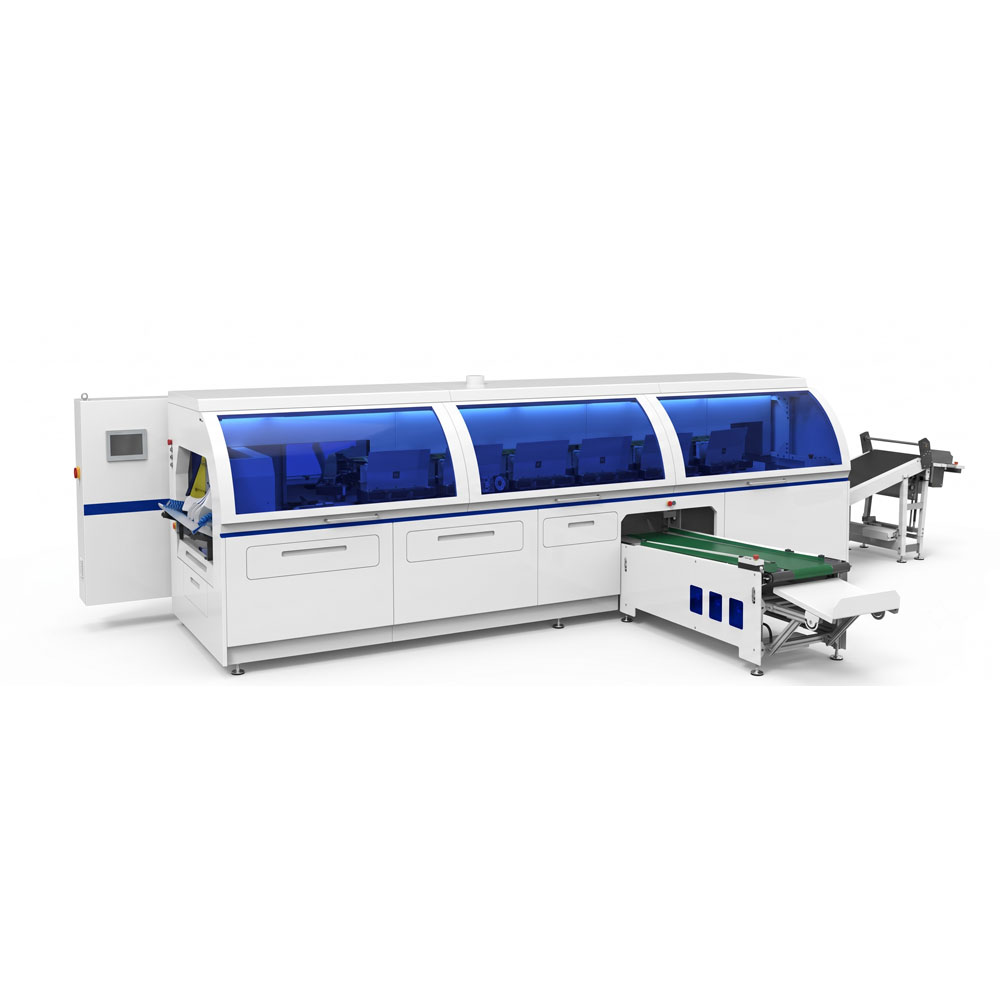 HDP5000PB13 Digital Perfect Binding Machine