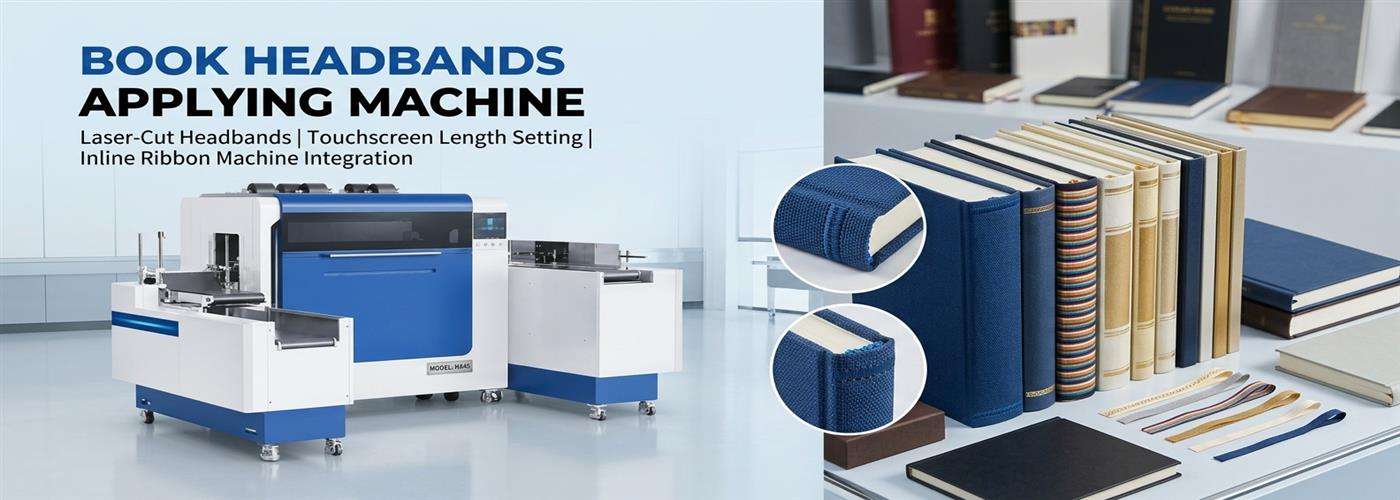
The HX45 Book Headbands Applying Machine is designed for applying book headbands to hardcover books, notebooks, ledgers, and other bound products. It features automatic book feeding, laser-cut headband processing, automatic headband gluing, automatic book delivery, and automatic stacking, ensuring efficient and consistent production.
|
Buyers of headband and ribbon equipment face a genuine fork in the road. One path is a single combined machine that applies both headbands and bookmark ribbons in one integrated pass. The other path is modular: separate machines for each operation, linked inline when the workflow calls for it. Both approaches produce the same finished result—a hardcover book with a ribbon and headbands—but they differ in investment phasing, flexibility, maintenance, and risk. This article compares the two paths so the choice matches the facility's actual situation.
The Two Approaches to Headband and Ribbon ApplicationThe combined approach uses one integrated machine that performs both operations. The machine feeds books, attaches the ribbon, applies the headbands, and delivers the finished product in a single pass. The advantage is a compact footprint and a single control system: one machine, one operator, one set of settings. The modular approach uses separate machines—a headband applying machine and a ribbon attaching machine—each performing its operation. The machines can run independently, each processing its own product stream, or they can be connected inline to process books sequentially. The HX45 book headbands applying machine is designed for this modular role: it operates standalone, and it can be integrated inline with a ribbon attaching machine to create a two-machine finishing cell. The Investment Phasing Difference Between the Two PathsThe combined machine is a single large purchase. It delivers full capability from day one, but it also requires full funding from day one. For a facility that currently applies both ribbons and headbands by hand, the combined machine replaces both operations at once—a larger capital commitment, but a complete solution. The modular path spreads the investment. A facility might buy the headband machine first, automate the operation with the most labor or quality pressure, and add the ribbon machine later when production justifies it. Each machine is a smaller purchase than the combined line, and the second purchase can be funded by the savings the first machine generates. For facilities that prefer phased capital spending, modular is the natural fit.
Operational Flexibility in Day to Day ProductionThe operating modes differ in ways that matter for real production schedules. The combined machine runs both operations together: every book that passes through receives both a ribbon and headbands. This is efficient when the product mix is uniform—every product needs both components. The modular setup offers more operating modes. Each machine runs independently, so the facility can apply headbands to one product stream while the ribbon machine processes a different product, or handles only the products that need ribbons. A facility whose product line includes both ribbon-and-headband products and headband-only products can run the modular setup more efficiently, because the ribbon machine is not idle during headband-only work. Maintenance and Downtime Risk ComparisonMaintenance is where modular architecture shows a subtle advantage. A combined machine's failure takes down both operations: a ribbon feed problem stops headband production too. The modular setup isolates failure: if the ribbon machine needs repair, the headband machine continues producing, and vice versa. For facilities that cannot afford to lose both operations to a single breakdown, modular isolation is a real risk reduction. The modular approach also simplifies service in another way. Each machine is a smaller, simpler system than a combined line. Its laser-cutting mechanism, gluing system, and book transport are dedicated to one operation, which can make troubleshooting and parts replacement more straightforward. The combined machine integrates both mechanisms in one system, which is more complex to diagnose and service. Physical Layout and Floor Space ConsiderationsThe combined machine occupies a single footprint, which is its physical advantage. One machine, one foundation, one installation. For a facility building a new production cell from scratch with limited space, the combined line fits in less floor area than two separate machines.
The modular setup occupies more floor space in full configuration—two machines placed inline—but it offers layout flexibility. The machines can be positioned separately if the workflow calls for it, one near the casing-in line and one in a different production area. The HX45's 1,650-kilogram weight and the ribbon machine's similar class make both easy to position and reposition as production evolves. A facility whose layout changes periodically benefits from the modular setup's rearrangement flexibility. Speed and Capacity MatchingBoth approaches run at similar speeds. The HX45 processes 20 to 45 books per minute. The combined line with ribbon and headband operates in the same range. The matching question is whether the operation's speed keeps pace with the upstream and downstream processes. In a modular setup, each machine's speed can be matched to its own process stream. If the headband operation is the bottleneck, that machine's speed governs; if the ribbon operation feeds a different product mix, its speed is set independently. In a combined machine, the two operations share one speed setting, which is simpler but less flexible when the two operations serve different product streams. The Decision Framework for Choosing Between the PathsThree factors determine which path fits. The first is product mix. If every product requires both ribbon and headband, the combined machine's single-pass efficiency is ideal. If the mix includes products needing only one component, the modular setup's independent operation avoids idle capacity. The second factor is investment phasing. If capital is available for a full solution now, the combined machine delivers complete capability immediately. If the facility prefers to automate in stages, funding each machine from the previous one's savings, the modular path spreads the commitment. The third factor is maintenance risk tolerance. If a single machine failure that stops both operations is unacceptable, the modular setup's isolation protects production. If the facility operates multiple lines and can absorb a combined machine's downtime, the compact combined footprint may be worth the risk. Verifying the Choice Against Your Production RealityWhatever path is chosen, verify it against the facility's actual production. Confirm that the headband machine's envelope—book sizes 85 by 100 to 240 by 300 millimeters, thicknesses 4 to 60 millimeters, headband widths 15 to 17 millimeters—covers the full product range. Confirm the ribbon machine's range if it is part of the modular setup. Run trials with the facility's real materials to verify quality.
Why the Modular Path Fits Facilities with Evolving Product LinesThe modular approach carries one additional advantage for facilities whose products are still evolving: it defers commitment. A facility that buys a combined machine commits to one configuration of ribbon and headband processing, sized and arranged as the manufacturer builds it. A facility that buys modular machines keeps the flexibility to change the arrangement as products change. If a new product line requires a different headband width, the headband machine is adjusted or replaced independently without touching the ribbon operation. If a customer orders a large headband-only job, the ribbon machine is simply not run, and no combined machine sits partially idle. For a facility whose product portfolio is still finding its shape, the modular path preserves the option to change direction without discarding a large integrated investment. The choice between modular and combined is not a contest of which is better in the abstract. It is a match between equipment architecture and the facility's product mix, capital situation, and risk tolerance. A facility with uniform products and available capital may find the combined line perfect. A facility with mixed products, phased budgets, and low tolerance for downtime may find the modular setup—the HX45 headband machine with its inline ribbon-machine capability—the better fit. Both paths lead to automated headband and ribbon production; the right one follows from the facility's own circumstances. |
| Tag:Automatic Book Headband Applying Machine,Hardcover Bookbinding Machinery,Automatic Book Headband Gluing Machine,Post-Press Book Finishing Equipment |
Please Leave Your Messenger Here!
We will do our best to make your business prosperous!


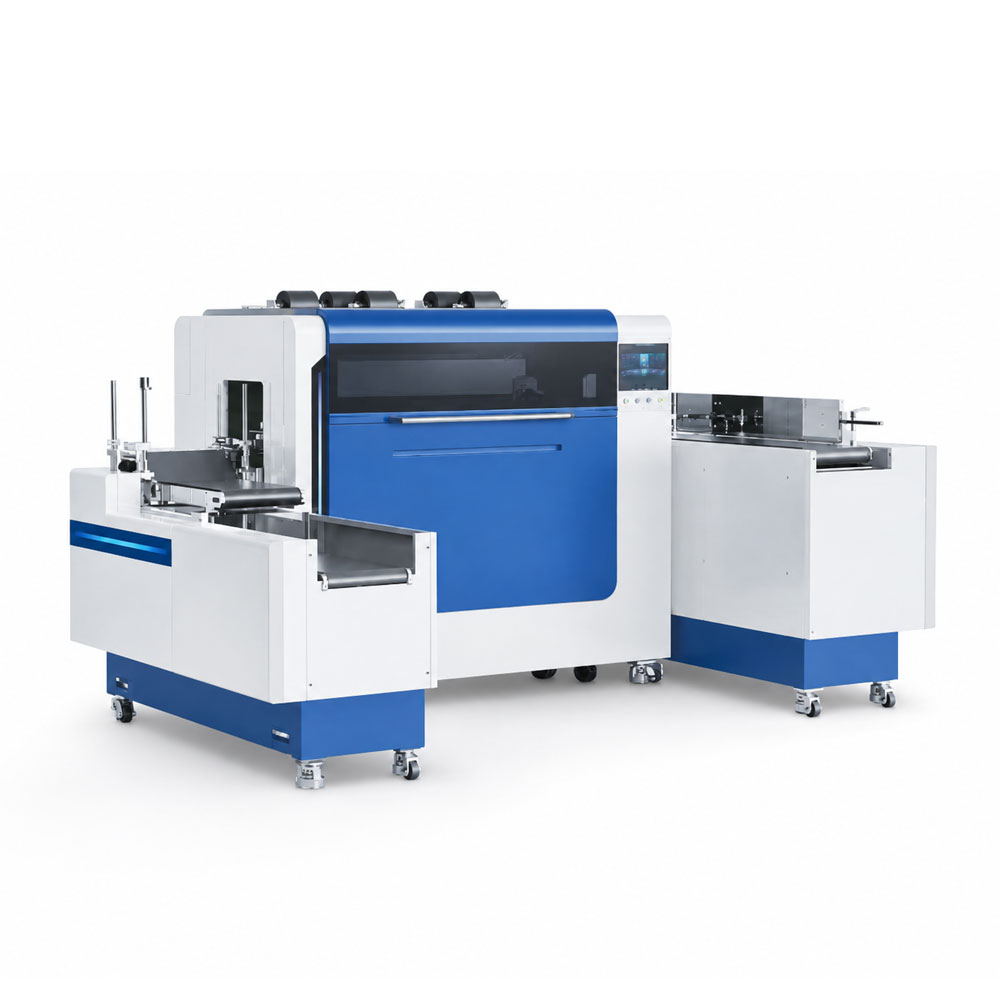 HX45 Book Headbands Applying Machine