
A clear and practical overview of different types of hardcover case making machines, from semi-automatic and digital models to medium- and high-speed automatic systems, helping hardcover book producers and investors understand their shared principles, key technical differences, and the right equipment choices for efficient casebound book production.
|
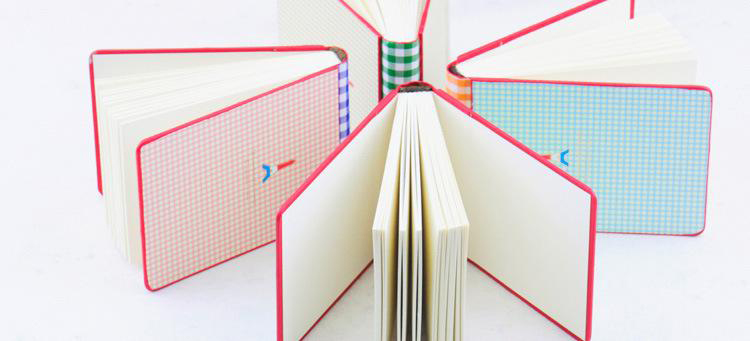
Hardcover case making is the structural foundation of premium casebound books: boards and covering material are converted into a rigid, accurately aligned case, and that case quality ultimately determines squareness, corner sharpness, spine definition, and the 'hand-feel' of the finished book. Across the spectrum—from compact semi-automatic stations to high-speed automated lines—the objective is the same: deliver consistent positioning, clean turn-ins, stable adhesion, and repeatable pressing with minimal setup time even when formats change. ChinaPrintech's lineup is intentionally tiered so a workshop can start with a flexible semi-auto process and scale toward automation as order volume, labor cost, and quality requirements increase.
At the entry level, the 'Semi Auto Case Making Machine' is designed for users who need dependable hardcover cases but value low investment, compact footprint, and simple operation. It is widely used for notebooks, photo books/albums, folders, certificates, and hardcover books, and its workflow emphasizes practicality for short-run and digital post-press: one operator completes the wrapping/pasting operation in two passes while working both sides simultaneously, making it a strong fit when jobs change frequently and space is limited. In terms of capacity and format range, it supports up to '760×450 mm' open case size (down to '140×140 mm'), paperboard thickness '1–4 mm', spine width minimum '8 mm', and cover material '80–200 gsm', with a rated work speed of '3–9 pcs/min'.
When the same semi-automatic logic needs higher throughput and smoother flow, the 'Semi Auto Dual Stations Case Making Machine' adds a clear technical upgrade: two dedicated working stations, one for 'positioning the cardboard' and the other for 'bending/turning in the edges', so operators spend less time waiting and more time producing. This dual-station architecture is especially valuable for small-to-mid producers who have stable demand and want to raise productivity without jumping immediately to full automation. Its published specs highlight a similar material capability—paperboard '1–4 mm', cover material '80–200 gsm', minimum spine '8 mm'—while extending the maximum open case size to '780×430 mm' (minimum '140×140 mm') and delivering '4–6 pcs/min' in typical operation.
For customers whose production is increasingly 'format-variable' (many sizes, frequent repeats, and quick changeovers), the 'Semi Auto Digital Case Making Machine' shifts the semi-auto category toward data-driven repeatability. It is 'controlled via a digital panel' for data input and recall, and its operating concept is deliberately simplified: one operator applies glue, positions boards, tucks corners, and feeds—then the machine automatically 'forms all four cover edges and presses the case complete', enabling economical one-off or small-batch production with minimal setup time. Beyond standard book covers, it is positioned for a wide set of turned-edge products, including 'single, multi-part, or asymmetric cases' such as ring binders, menu covers, photo albums, folders, and calendar backs—useful for plants that mix publishing work with commercial turned-edge products. Key format and capacity figures include max open case '700×400 mm', min '240×150 mm', board '1–4 mm', cover material '80–200 gsm', and '6 pcs/min' work speed.
Moving into automated production, the 'HX36 Multifunctional Automatic Hardcover Case Making Machine' is the bridge between semi-auto flexibility and industrial-scale consistency. Its core value proposition is versatility: compared with traditional case makers, it is designed not only for standard straight-corner cases with '1–7 separate boards', but also for 'round corners' and multiple case geometries such as 'arc, triangle, and trapezium'. The stability and repeatability of this platform are reinforced by a 'cam-driven mechanical system', which the manufacturer associates with more accurate positioning and a more durable, stable running profile—an important point for investors evaluating long-term uptime and quality consistency. Mechanically, the published configuration highlights dedicated subsystems such as a 'cover feeding device', 'corner bending device', 'soft spine device', and a 'multifunctional gluing system', which collectively support continuous operation and broader product coverage than typical semi-auto stations. In capability terms, HX36 supports cases from '70×70 mm' up to '680×400 mm', with center board size '6–100 mm', board thickness up to '5 mm' (center board thickness '0.3–5 mm'), gutter width '3–17 mm', and a speed range of '10–36 pcs/min', which is a decisive step up for producers targeting repeatable mid-volume output without the footprint and infrastructure demands of a 60 cycles/min class system.
At the top end, the 'HX60 PLUS / High Speed Hardcover Case Making Machine' is engineered for mass production where cycle time, labor efficiency, and process control dominate the investment logic. The platform is positioned as setting a global benchmark for flexibility and reliability in automated case making, producing cases for books and also files, posters, calendars, and board game components at speeds up to '60 pcs/min' automatically. Technically, the published parameters show the deeper “process envelope” that matters to high-output plants: board thickness '1–4 mm' (with an optional device enabling minimum '0.6 mm'), spine width '6–80 mm', channel rail width '4–15 mm', flexible spine thickness '0.3–0.5 mm', and cover material thickness '0.1–0.3 mm', along with a maximum expanded case size of '680×390 mm' and minimum '105×160 mm'. Industrial integration requirements are also explicit: compressed air '650 L/min @ 6 bar', installed power '15.5 kW' (including '6 kW' heating for glue melting), and machine weight '6300 kg'—details that investors should treat as planning inputs for utilities, layout, and total cost of ownership.
For end users and production investors, the selection logic is straightforward: if you prioritize agility, low entry cost, and short-run digital post-press compatibility, the semi-auto family delivers strong value; if you need faster operator rhythm without full automation, dual-station semi-auto is the practical upgrade; if job changeovers and repeat settings are frequent, the digital-panel semi-auto adds repeatability and reduces setup friction; if your business model is scaling toward stable daily volumes with broader case styles, HX36 provides automated consistency with multi-shape capability; and if you are building a high-throughput plant where per-unit labor and cycle time are decisive, HX60 PLUS is the productivity ceiling. In every tier, the shared goal remains identical: produce square, clean, durable hardcover cases that protect the book block and elevate perceived product value—while aligning machine investment with your format mix, staffing model, and output target. |
| Tag:hardcover case,hardcover book case,hardcover case making machine,casebound book,casebound |
Please Leave Your Messenger Here!
We will do our best to make your business prosperous!



 Semi Auto Case Making Machine
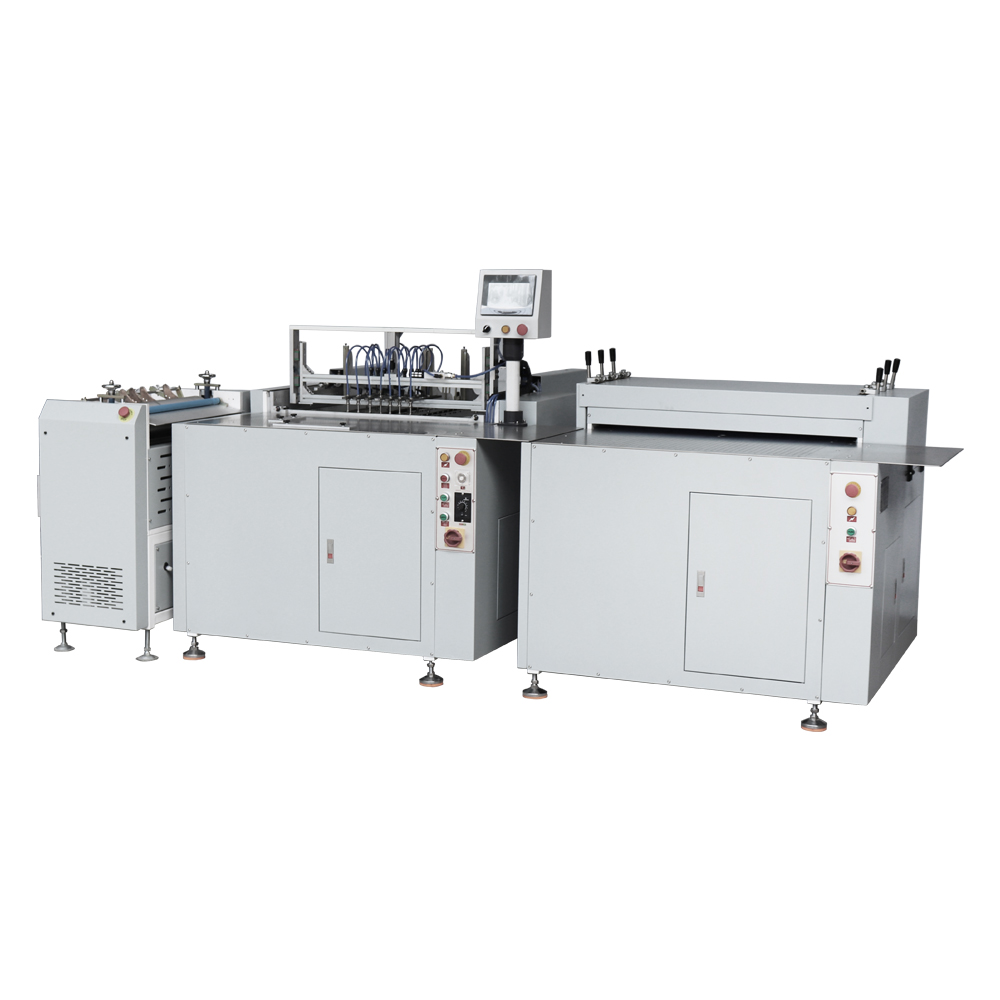 Semi Auto Dual Stations Case Making Machine
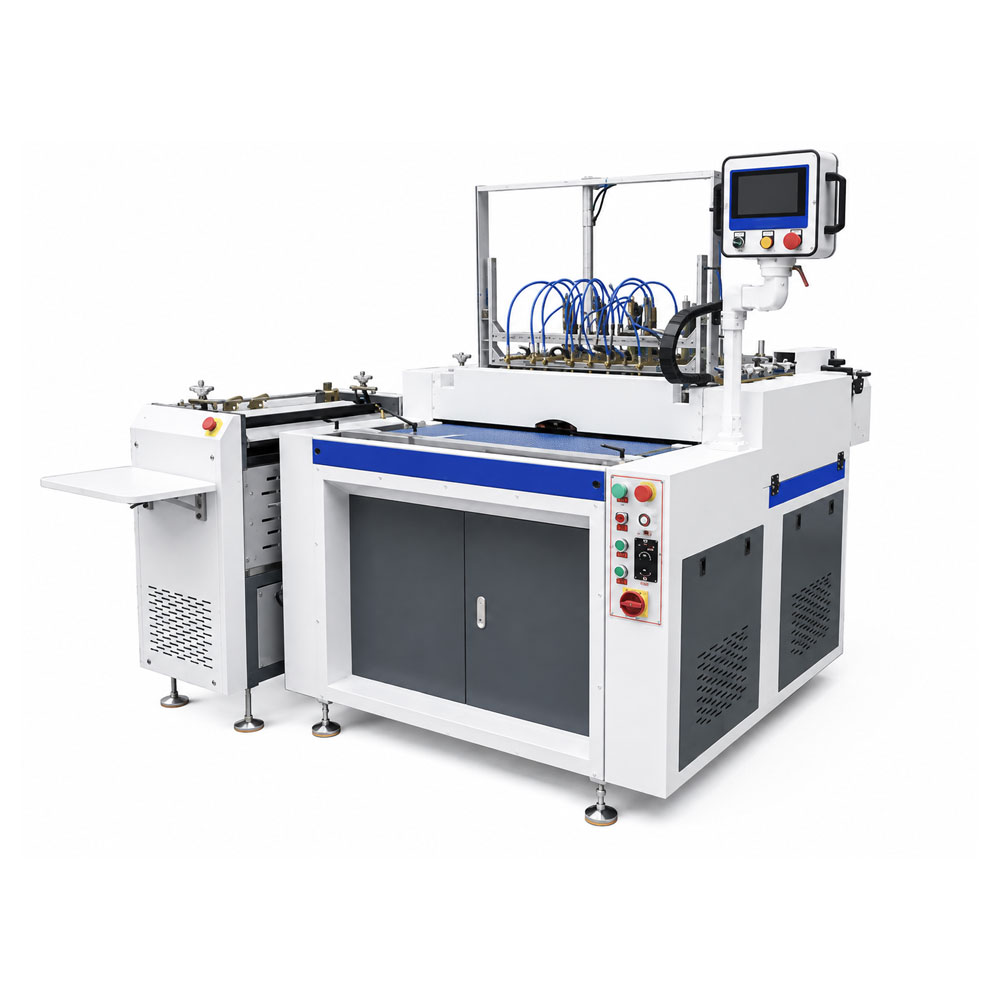 HX7DS Semi Automatic Digital Case Making Machine
 HX36 Multifunctional Automatic Hardcover Case Making Machine
 HX60 PLUS High Speed Hardcover Case Making Machine